
For ESS’s, the ATO has pretty strict regulations about valuing unlisted shares. In a nutshell, you can either:
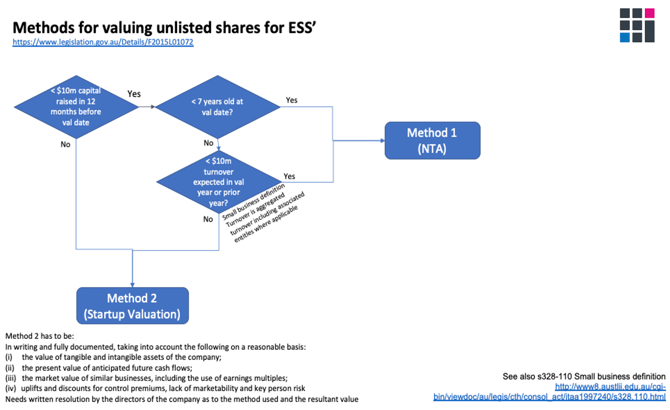
Prepare and use a Net Tangible Asset (NTA) book valuation, if you meet the following criteria
- your startup hasn't raised more than $10m in the 12 months immediately before the valuation time; and
- your startup is less than 7 years old or is a "small business entity" under the tax law; and
- your startup prepares financial reports.
Otherwise, you will need to undertake an alternative method of valuation as accepted by your board that takes into account:
- future cash flows;
- similar businesses; and
- illiquidity of unlisted companies.
Our Startup Valuation considers these aspects.
Options are issued via an Offer Letter, subject to the overall Employee Share Option Plan rules. The Offer Letter sets out the exercise price (the amount the employee has to pay to convert their option into a share) based on the valuation. ESOPs are typically earned (or vested) over 3-4 years until an employees full entitlement is reached. The exercise price is fixed upfront and specified in the Offer Letter. As future (rounds of) employees join the company, the valuation needs to be redone, at that time, to set the exercise price for the incoming employees.
When should I update my valuation?
In short, when the valuation is no longer a reflection of the market value, or the underlying balance sheet has changed susbtantially if using the NTA valuation. This typically is whenever there is a new funding round, there has been a material change in the business or it's getting "stale". We'd generally recommend re-looking at this every 12 months.